
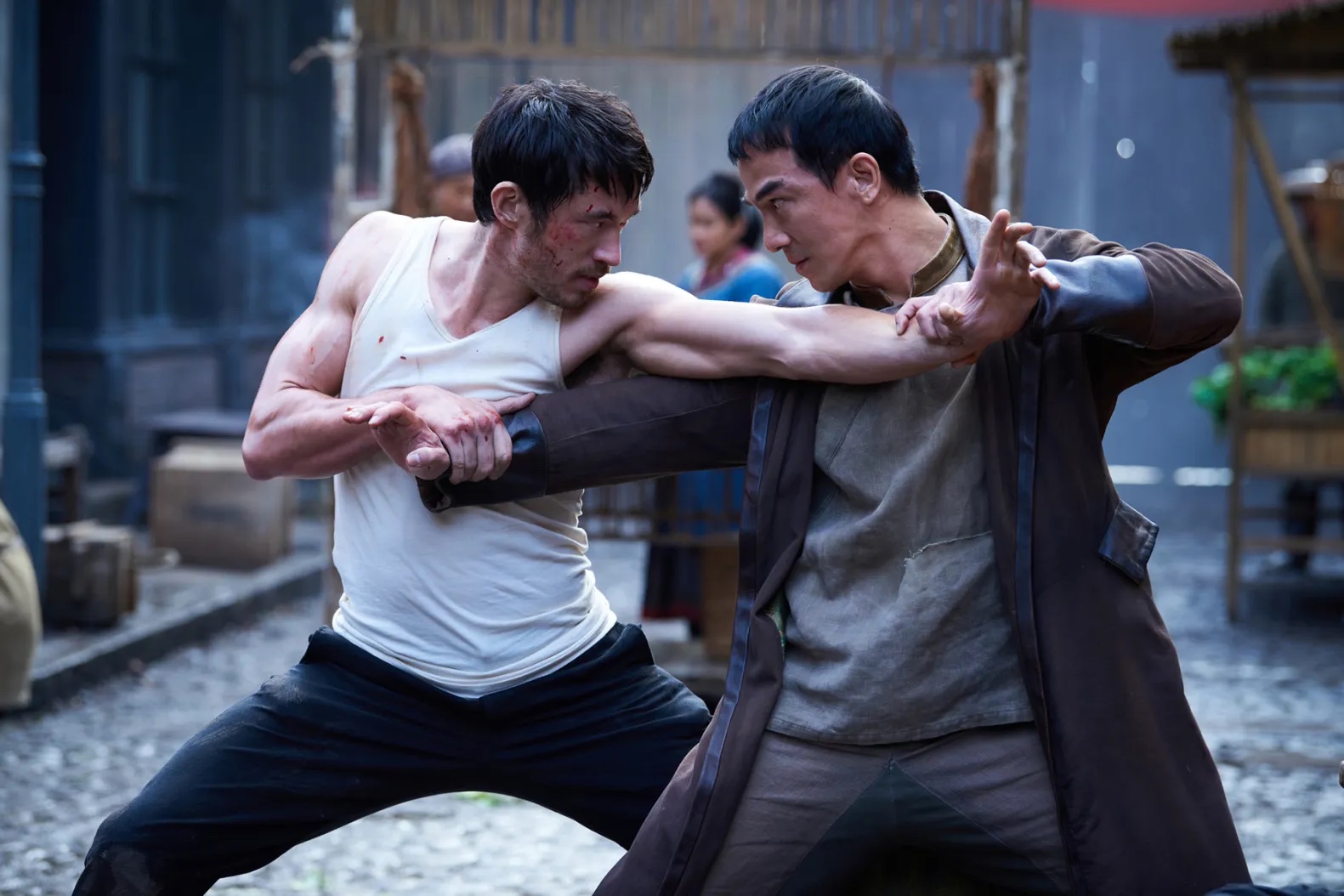
Brett Chan is quite the artist of death. He’s the stunt coordinator of Warrior. The Max series, which continues to grow its passionate fanbase on Netflix, is a period piece with bonebreaking and heartbreaking action.
The character-driven action has led to another Emmy nomination for Chan, who’s nominated for Outstanding Stunt Coordination.
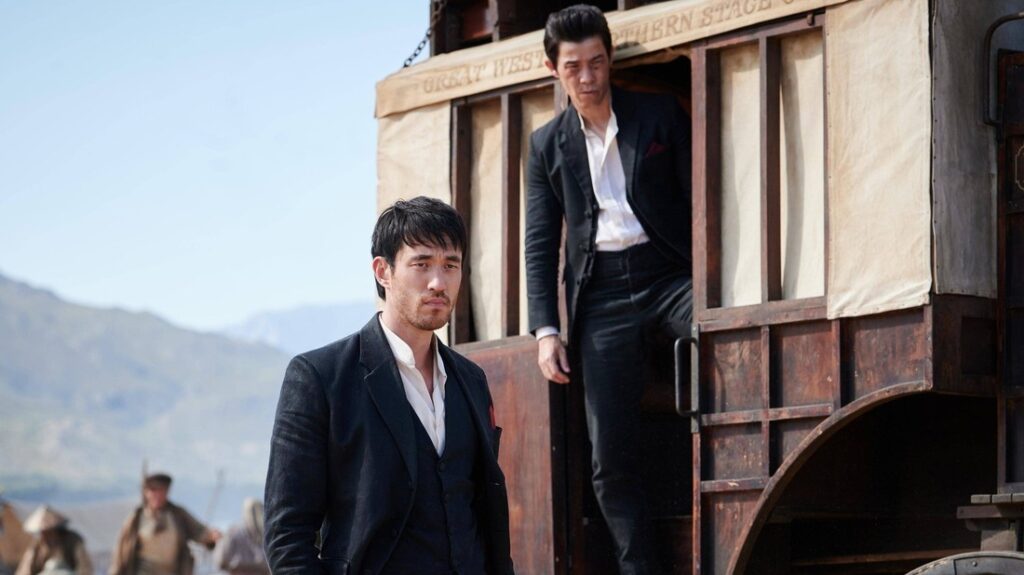
Chan directed action sequences in the past for Warrior, but with season three, Chan also directed a full episode with “A Soft Heart Won’t Do You No Favors.” It was one of the more western-styled episodes of the season. The co-founder of Hitz International delivered an hour with all the drama and spectacle expected from the show.
Here’s our conversation with the Emmy-nominated Brett Chan, who’ll soon make his feature directorial debut with Warrior star, Andrew Koji.
You got to do a sweet homage to The Wild Bunch with “A Soft Heart Won’t Do You No Favors.”
A bunch of westerns. Yeah, definitely Magnificent Seven, too. All those things just kind of happened.
We spoke before about one of your pet peeves when a fighter just stands in the background, doing nothing during a fight scene.
You didn’t see that, did you?
No, I did not. It made sense where everyone was.
Okay, good, good.
I imagine there were probably times where those shortcuts could have saved you time and energy. What were things that you were just unwilling to compromise on?
Just the scenes. In my edit, I had certain scenes kind of drag on a little bit with a beat or two, because I felt it drew out emotion more. But because my episode was a little long, they were cutting things a little shorter everywhere. So, I felt that I missed a little bit of this and a bit of that.
We didn’t really get to compromise that much. I mean, my DOP, George Amos, was fantastic and all over it. We already had a shot-list planned out. We got mostly everything with the fight scene, but the knife fight scene, I wasn’t entirely happy with that one. I had to leave that day, because I got sick. I mean, I was directing, second coordinating, it was just crazy. The doctor and my producer, Richard Sharkey, says, “Nope, you’re going home.” I said, “No, I can’t. My fight. I can’t.”
I started the day, but they made me home and my righthand, Johnny Yang, who second-united directed my episode, took over. But there’s a few things that I do miss from the actual fight itself that I wished were there, but I still think it turned out pretty good.
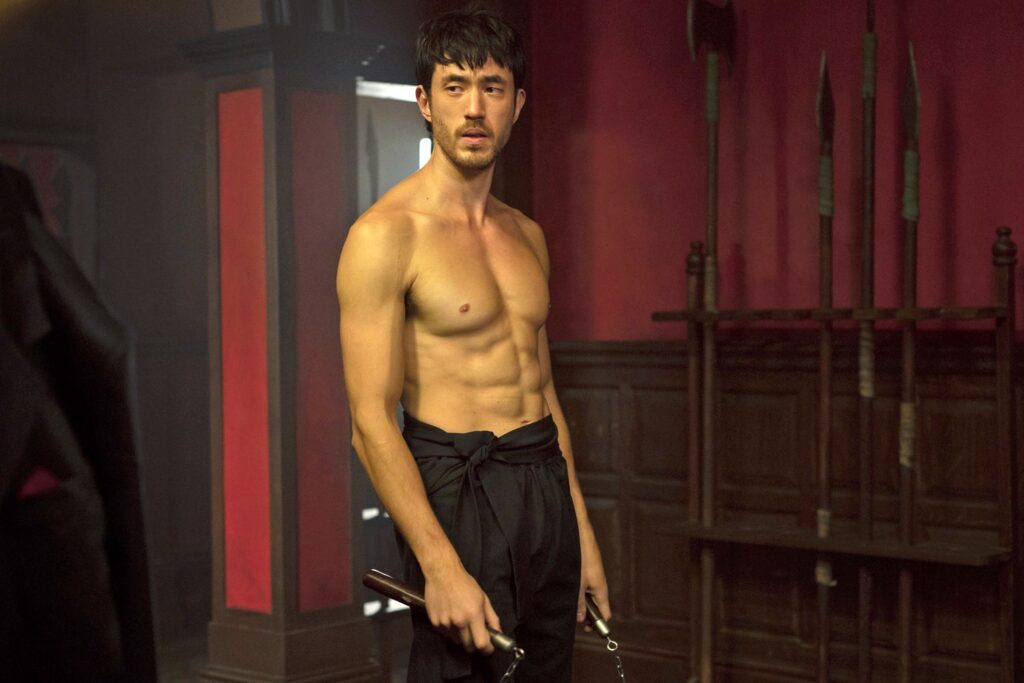
If you weren’t sick, what would you have filmed?
It’s just nuances. When I do choreography, my training is so specific. When I do a certain move and Andrew’s like, “Well, I don’t want to do that move anymore because it didn’t work.” I’m like, “What do you mean it didn’t work?” He goes, “Well, he did this.” “That’s completely wrong.” When you go for a knife disarm, there are certain parameters you have to do to protect your wrists, the movement to grab when he lunges forward, and why you do all this.
Why is he there letting you grab him and disarm him? Because when you grab somebody by the arm, let’s say, if you stand there and you’re doing another move for whatever it is, what’s the guy doing? You have to give him a reason that he’s not pulling away or not stepping forward. So if I block you, I’ll pull you, just to give you that little tug. So, that’s that half a beat moment that I have to turn and pull the knife out, that kind of thing. There were a couple of things like that missing there. I had to edit around it.
There’s quite a one-shot in that episode.
Johnny Yang, my guy, he basically said, “We’re going to make this oner.” I’m like, “Do it.” We did the choreography, we did this, we did that, and he ran the show for me. So, that was a oner off the top with the shotgun. Everything’s a oner up to the point when young Jun tackles the guy down to the ground and gets up. We’re trying to follow the character’s face. I want to get their emotions. What’s happening? I’m trying to tell the story there, and it just basically takes you out of having to be conscious about a oner.
How’d directing a full episode compare to your expectations?
Well, I’m so integrated in the show and every episode. I shot my episode at the very end. Basically, I have a month of prep ahead of time. When I start prepping, I start doing everything. I already have cornerstones of everything I have to do. I’ll choreograph episode one, six and three, depending on the schedule and depending on where I am with the choreography and who I have access to in terms of actors and stuntmen.
I was still shooting two episodes while I was prepping six. I’d come in at seven in the morning, I’d do a meeting, and then between the meeting, the next meeting, there’s another hour. I run downstairs to my facility, choreograph a fight, and come back upstairs to the next meeting for my episode. And then I go back downstairs and I do something else, another choreography or train an actor, run back upstairs. And then I go to another meeting. I do my paperwork, and I come back downstairs, and go to the set. I’m on set doing another scene, which I’m second-unit directing.
I come home, and the the next day, it’s same thing on location or whatever it is. Luckily, I have a strong team. I can just delegate exactly what I need. They follow through. And then after my, let’s say, tech survey, I’ll come back and they’re doing what I ask them to do. I’ll go over it just to look for little idiosyncrasies, the movements or whatever it is, the choreo or talk to what actor. Then I got to do paperwork with my DOP and stuff like that. You can imagine it was hectic. It was just hectic.
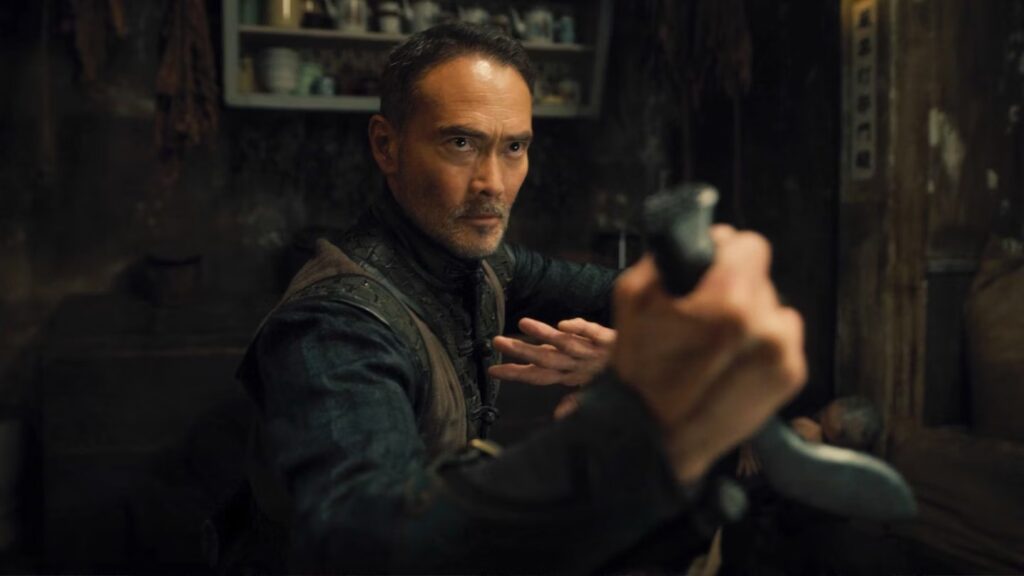
As a director, how’d you enjoy directing dialogue-driven scenes? Did it come naturally?
I never really wanted to get into directing, second-unit directing maybe, just because it scared me. To deal with actors and their influence, their motives, it was always kind of scary. Literally, I would rather get hit by a horse. Put me in front of a horse in The Last Samurai and hit me all day long, and I would rather do that. Send me flying 40 feet. It’s great.
As the years went by, I just felt that it started becoming more natural. In everything I do, even in my fights or action, I tell the story of the character in what’s happening as opposed to just, here’s an action piece for you. There’s a story to it all, not just how he’s moving, how he looks if he hits. It’s just all these little things that I like to give, which tells us how they’re going to move in a situation with their character.
You and me, let’s say we’re walking down the street. Let’s say three guys are walking down the street look at us and our reactions will be a little bit different. Maybe we’ll approach it differently. I mean, in South Africa, three guys tried jumping me.
Oh, I’m sorry.
Yeah, that’s okay. I mean, it’s common. We’re downtown, it was nighttime. I didn’t realize it was a bad area. I was just waiting by the corner for my Uber to show up, and two guys walked up and I’m like, okay, they want my phone. Then I saw another guy coming up and I was like, bam, bam, bam.
Next thing you know, two of them are on the ground and one’s kind of looking at me, doesn’t know what to do, and then my Uber shows up. It was fine. But in a situation where most people don’t train martial arts or don’t train situational awareness, what would they do? Just let them take my phone? But my first reaction was to do what I did.
So regardless if you’re “here’s my phone” or get right into it distracting them, I’d be like, wham, wham, wham. So, it’s still a situation. It’s still dealt with in two different ways, so when I want to tell the story, I want to tell the story through that character aspect. It can’t just be what’s expected. Everyone’s expecting, “Well, it’s Brett, so he’s going to fight. He’s Brett.” So, in that case, maybe I do something completely different. Maybe I drop my phone to distract him, to kick him. And then, it’s just little things of how I would devise a plan of how I would get out of a situation.
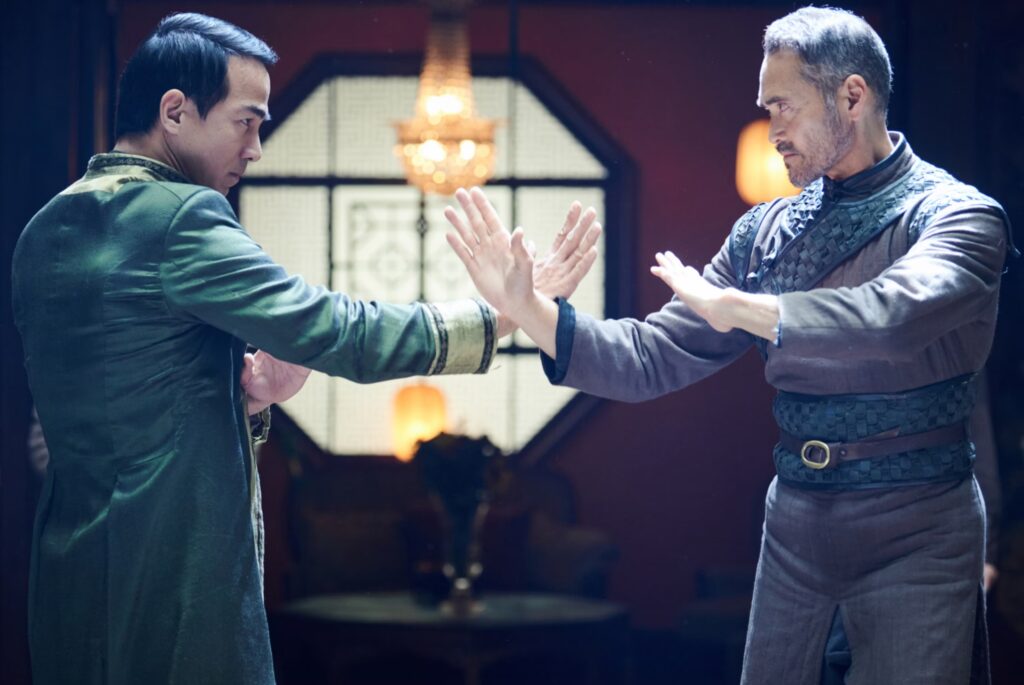
As someone that works in movement, it just seems like piecing together moving images would be right at home for you.
I actually loved it. When we did the train sequence, the actors did the work for me. I took the scene, okay, and George, my DOP, was like, “I like this better. We’re doing this.” I tell him, “Okay, great. I push it over here, cut over there. Okay, great.” I talked to the actors and said, ” Hey, listen, this is where I need you to go. This is where I need to be.” And then they give me their take. Give me something that you want to do, you know what I mean?
I don’t want to tell them how to do it. I’ll tell them the scene. I’ll ask them where they’re at, give ’em motivation, what’s going on. How would you do this? How would your character react? They think about it, they always want a second or third take because they want to give their creativity to the scene, not just what I’m telling them what to do. I find that most actors don’t like it when I tell ’em, “Do this and turn, stop and turn your hand over here.” Every time it’ll be something a little bit different, which would be kind of cool.
Stunt coordinators, such as yourself, are continuing to prove they make for good directors, aren’t they?
More stunt-action directors, they’re more filmmakers now. They’re not just making fight videos, which is how we started. We started shooting fight sequences just to create. This is what we do. But it becomes boring when you’re like, how often can you watch a cool fight? How often can you do that? It gets dull. We started to evolve. We started to evolve, telling story, creating why the character moves this way, and figuring out the why and where they’re coming from. I think that’s important to storytelling. Otherwise, it just becomes a fight.
Warrior is available to stream on Netflix.